MÆMOR.AI Labs · Humanistic AI

Your very own private digital twin — on-device, on-demand.

At MÆMOR.AI Labs, we believe the ultimate goal of artificial intelligence should be in the service of natural intelligence, that is, of course, our human brain.

Recall any moment, idea, or feeling — in your own words.

20+peer-reviewed papers
On-deviceprivate by design
10+years of ongoing research
Our Mission

A user manual for your own brain. A search engine for all the experiences that make you, you.

MÆMOR.AI is the best “mirror” you can ever have, revealing blind spots to enable frictionless self-understanding and agency so you can best tell your own human story.

Research

Papers

The ongoing science behind MÆMOR.AI . A decade of peer-reviewed work on keystroke dynamics, digital phenotyping, and the brain, the foundation MÆMOR.AI is built on.

19 of 19

2025Unobtrusive inference of diurnal rhythms from smartphone data

Knol, L., Ross, M. K., Nagpal, A., Burns, A. P., Morrissey, Z. D., Hussain, F., Eisenlohr-Moul, T. A., Beckmann, C. F., Leow, A., Marquand, A. F.

JMIR Ment Health10.1038/s41746-025-02254-1

2024Using Large Language Models to Understand Suicidality in a Social Media-Based Taxonomy of Mental Health Disorders: Linguistic Analysis of Reddit Posts

Bauer, B., Norel, R., Leow, A., Rached, Z. A., Wen, B., Cecchi, G.

JMIR Ment Health10.2196/57234

2025Predicting cognitive functioning in mood disorders through smartphone typing dynamics

Ning, E., Estabrook, R., et al.

Journal of Psychopathology and Clinical Science

2024Smartphone keyboard dynamics predict affect in suicidal ideation

Knol, L., Nagpal, A., et al.

npj Digital Medicine7(1), 54

2024Digital phenotypes of mobile keyboard backspace rates and their associations with mood disorder symptoms

Liu, Q., Ning, E., et al.

Journal of Medical Internet Research26, e51269

2023Real-time associations among MS symptoms and cognitive dysfunction using ecological momentary assessment

Chen, M. H., Cherian, C., et al.

Frontiers in Medicine9, 1049686

2023A novel approach to clustering accelerometer data for passive predictions of changes in depression severity

Ross, M. K., Tulabandhula, T., et al.

Sensors23(3), 1585

2023Smartphone-derived virtual keyboard dynamics coupled with accelerometer data as a window into understanding brain health

Ning, E., Cladek, A. T., et al.

CHI Conference on Human Factors in Computing Systems1–15

2022Revisiting power-law estimation with applications to real-world human typing dynamics

Rashidisabet, H., Ajilore, O., et al.

Physica A: Statistical Mechanics and Its Applications599, 127384

2022Associations between smartphone keystroke dynamics and cognition in MS

Chen, M. H., Leow, A., et al.

Digital Health8, 20552076221143234

2022Smartphone accelerometer data as a proxy for clinical data in modeling bipolar disorder trajectory

Bennett, C. C., Ross, M. K., et al.

npj Digital Medicine5(1), 181

2022Predicting clinically relevant changes in bipolar disorder using smartphone typing dynamics

Bennett, C. C., Ross, M. K., et al.

Pervasive and Mobile Computing83, 101598

2021The effects of bipolar disorder risk on a mobile phone keystroke dynamics-based biomarker of brain age

Zulueta, J., Demos, A. P., et al.

Frontiers in Psychiatry12, 739022

2021Naturalistic smartphone keyboard typing reflects processing speed and executive function

Ross, M. K., Demos, A. P., et al.

Brain and Behavior11(11), e2363

2020Effects of mood and aging on keystroke dynamics metadata and their diurnal patterns in a large open-science sample: A BiAffect iOS study

Vesel, C., Rashidisabet, H., et al.

Journal of the American Medical Informatics Association27(7), 1007–1018

2018Passive typing instability predicts future mood outcomes

Stange, J. P., Zulueta, J., et al.

Bipolar Disorders20(3), 285–288

2018Predicting mood disturbance severity with mobile phone keystroke metadata: A BiAffect digital phenotyping study

Zulueta, J., Piscitello, A., et al.

Journal of Medical Internet Research20(7), e241

2018dpMood: Exploiting local and periodic typing dynamics for personalized mood prediction

Huang, H., Cao, B., et al.

ICDM157–166

2017DeepMood: Modeling mobile phone typing dynamics for mood detection

Cao, B., Zheng, L., et al.

KDD747–755

Humanistic AI: something visionary is brewing.

A platform technology of tomorrow, MÆMOR.AI strives to be the companion for our human journey, helping curate and narrate every loving memory of our most personal human experiences. The journey to fully understand the subconscious and build the ultimate digital twin has just begun.

Our people

The people behind the science, strategy, and systems.

We bring together human-centered researchers, builders, and advisors united by a shared commitment to helping people understand and shape their own lives.

01

Founding Leadership Team

The founders shaping MÆMOR.AI’s mission, science, and long-term direction.

Alex Leow, MD, PhD

Alex Leow

MD, PhD

Jalees Rehman, MD

Jalees Rehman

MD

02

Advisors

Trusted experts helping guide the company’s legal, strategic, and technical decisions.

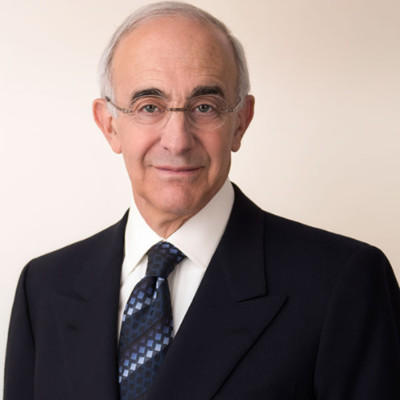
Bill Unger, Advisor

Bill Unger

Advisor

Christopher “Kit” Kaufman, Legal Counsel

Christopher “Kit” Kaufman

Legal Counsel

03

Engineering

The technical team building the systems and experiences behind MÆMOR.AI.

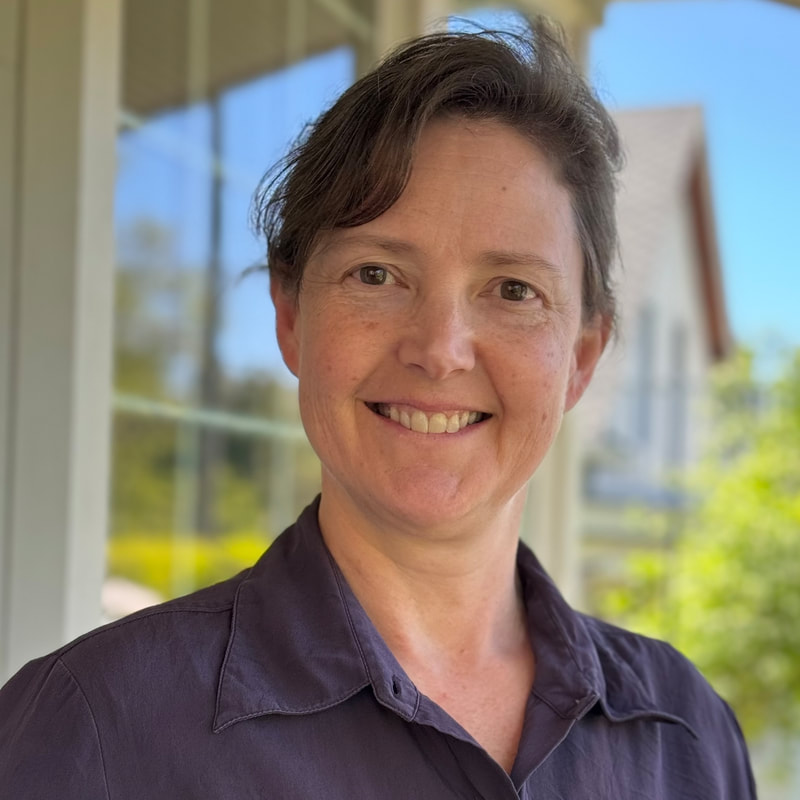
Shannon Young, Chief Engineering Architect Advisor

Shannon Young

Chief Engineering Architect Advisor

Faraz Hussain, Engineering

Faraz Hussain

Engineering

Alessio Pesavento, Engineering

Alessio Pesavento

Engineering

Tell your own human story.